
Yalda Night as a Cultural Text: Iranian Tradition Celebrated in Colombo
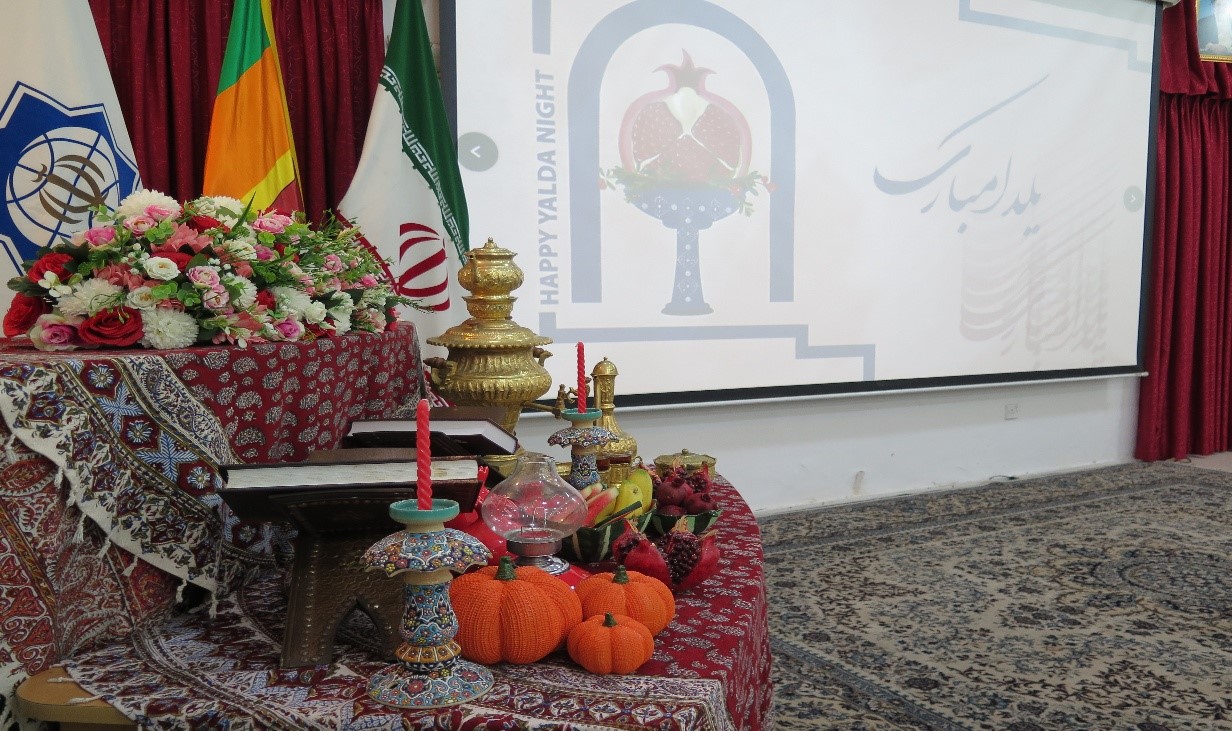
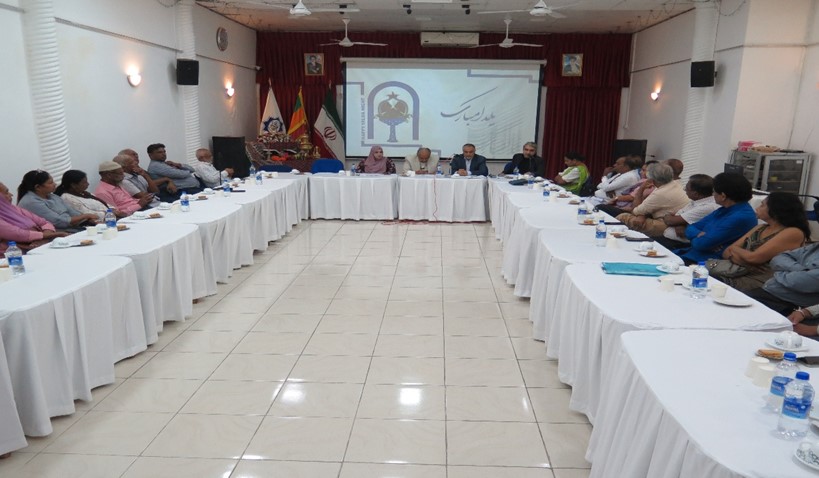
The academic conference titled “Iranian Yalda Night as a Cultural Text” was held at 3:00 p.m. on Wednesday, December 17, 2025, at the Cultural Counsellor’s Hall of the Embassy of the Islamic Republic of Iran in Colombo. The event was attended by university professors, researchers, artists, and enthusiasts of Iranian culture and civilization, and was organized in collaboration with the Sri Lanka Association for Iranian Studies.
Ali Kebreaei-Zadeh opened the conference by extending Yalda greetings to the audience, emphasizing that Yalda is not merely a calendar event but a philosophical articulation of the Iranian human experience in confronting fear and hope, light and darkness. He noted that for centuries, Iranians have gathered on Yalda Night to listen to stories and recite poetry, making Yalda a living history of the Iranian people manifested as a ritual of vigilance and awareness.
He added that celebrating this magnificent ritual in Sri Lanka—a land of ancient traditions ranging from Buddhist festivals to Hindu rites—imbues Yalda with renewed meaning. Since both Buddhist and Hindu traditions are deeply centered on the concept of light, the convergence of Iran and Sri Lanka reveals two ends of a vast spectrum of Eastern culture, rich with potential for cultural interaction and dialogue.
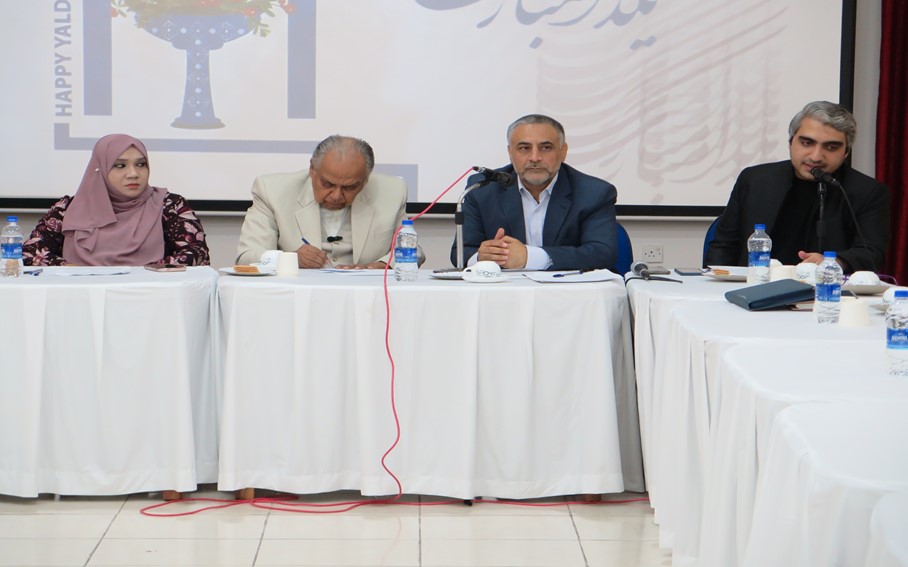
Mahinda de Lanerolle, jurist and retired university professor, described the primary purpose of Yalda as bringing people together as one large family. He stressed that the continuity of this ancient tradition depends on strengthening emotional bonds, empathy, and the transmission of cultural values from one generation to the next. He characterized Yalda as an opportunity for intimacy, dialogue, and the remembrance of shared human values—qualities that render this tradition understandable and shareable beyond geographical boundaries.
Mr. Madani, an Islamic scholar and Iranologist, focused on the historical and ritual roots of Yalda Night, presenting it as one of the oldest Iranian traditions with a history exceeding three thousand years, rooted in ancient Iranian beliefs and pre-Islamic rituals. He described Yalda as a symbol of the triumph of light over darkness and a sign of hope, birth, and renewal. He also highlighted symbolic elements such as pomegranates, watermelon, candles, and the recitation of poetry from the Divan of Hafez and Ferdowsi’s Shahnameh. Comparing Yalda with the Sri Lankan festival of Avurudu, he pointed to cultural affinities between the two nations and underscored the prominent role of poetry and spirituality in Iranian life.
Ms. Shefani, Secretary of the Sri Lanka Association for Iranian Studies, drawing on her experience at the International Conference on Iranian Studies and Cultural Dialogue held in Tehran and Shiraz, elaborated on the position of Iranian Studies as an interdisciplinary and strategic field. She described Iranology as a bridge between Iran’s civilizational past and the contemporary world, capable of providing an effective platform for cultural dialogue, academic cooperation, and international engagement. Referring to discussions at the conference—from classical Persian literature and Hafez’s poetry to modern technologies and cultural diplomacy—she emphasized the dynamism and contemporary relevance of Iranian Studies. She also shared her personal observations of Iranian society, highlighting hospitality, cultural order, and social ethics as defining characteristics of contemporary Iranian culture.
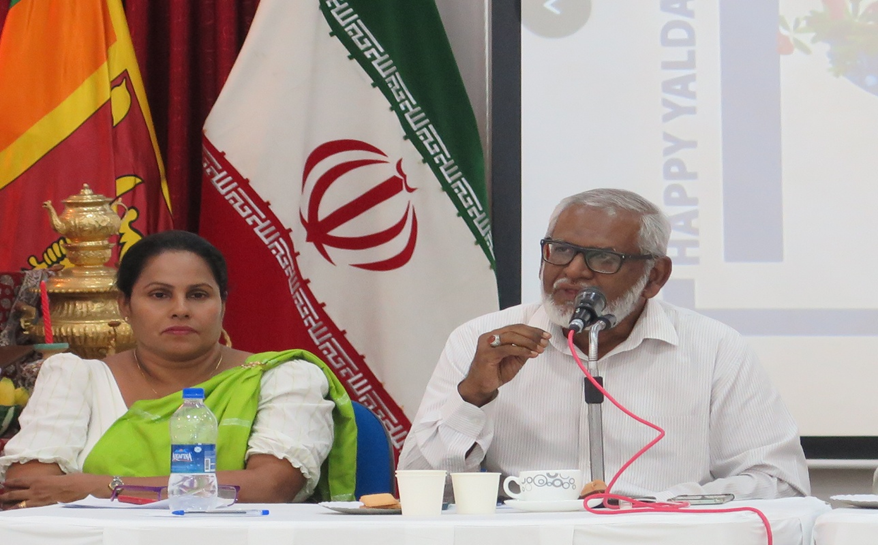
Ms. Anuradha Weerakoon, university professor and member of the Association for Iranian Studies, presented an analytical report on her academic visit to Iran, addressing the role of Iranian Studies in understanding Iran’s historical connections with South Asia, particularly in ancient history and Buddhist studies. Recalling the scholarly legacy of prominent Sri Lankan Iranologists, she described Iran as one of the key centers of ancient civilization, whose study is essential for understanding the region’s history. She noted that the unique elements of Iranian culture provide fertile ground for cultural dialogue between Iran and Sri Lanka.
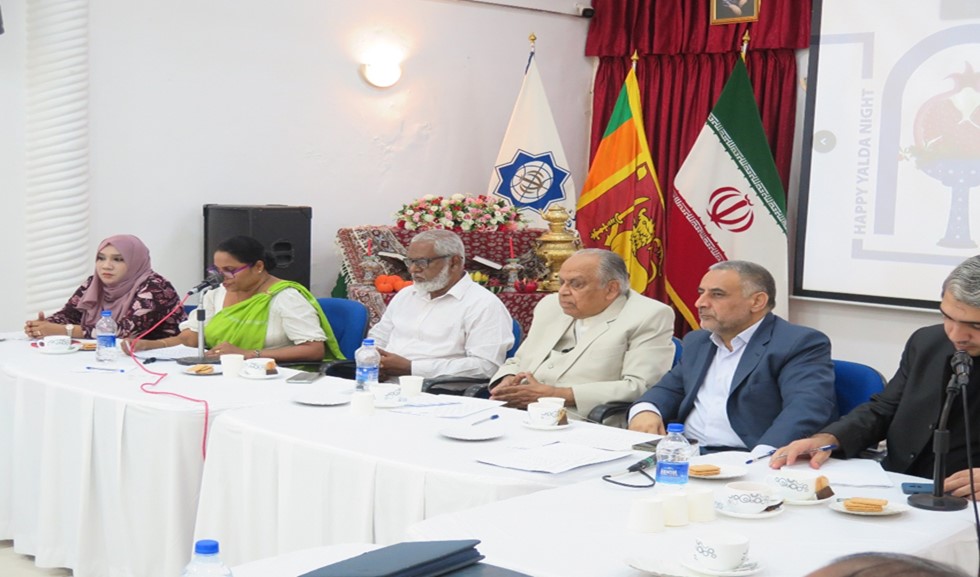
The concluding segment of the program featured a solo performance on the daf by Alireza Shahini, which was warmly received by the audience and highlighted the musical dimension of the Yalda ritual. Mr. Shahini also spoke about the significance of the daf in Iranian mystical and ritual music, presenting it as a symbol of the connection between music, spirituality, and communal life. He further drew attention to the structural and functional similarities between the Iranian daf and the Sri Lankan musical instrument rabana.
